


Brake failure in extreme cold


Thread Starter
|
Newest Of Newbies
Joined: Mar 2008
Posts: 15
From:
 Brake failure in extreme cold
This past week, my 2010 Accord has been parked all day at work with outside temperatures in the 5F to 10F below zero range. The first couple of times I apply the brakes after the car sits in the cold, the pedal is hard and there is little to no braking. On the third time I brake, the brakes perform normally. This has happened twice on 2 separate days within the last week. I consider this a very serious problem. Any ideas?
Last edited by gboone; Dec 8, 2013 at 06:15 PM.

Super Moderator
Joined: Aug 2012
Posts: 3,070
From: Southern New Hampshire
Have you had the brakes done since the car was new? I ask because a lot of "high end" ceramic pads need to warm up a bit before they'll grab. Conversely, "middle of the road" organic pads typically grab regardless of how cold they are.
Thread Starter
|
Newest Of Newbies
Joined: Mar 2008
Posts: 15
From:
I bought this car about 9 months ago as a "Honda Certified Used". Prior to that it was a lease, so I doubt it has ceramic pads. Also the first couple of stops were so slow it didn't a chance to get the pads hot. And the brakes changed dramatically from not working at all to normal good brakes.

Super Moderator
Joined: Aug 2012
Posts: 3,070
From: Southern New Hampshire
As for the brake fluid being the issue in extreme cold, while I'm not saying that is impossible, I will say it is highly-highly unlikely.

Super Moderator
Joined: Aug 2012
Posts: 3,070
From: Southern New Hampshire
Ummm, thinking about my last statement, not completely true; if I was to drive through a slushy puddle the brakes would cool too much and I'd need to repeat the hold the brake pedal for several seconds until the brakes would bite again.

Super Moderator
Joined: May 2006
Posts: 18,398
From: Wisconsin
Have you ruled out something like frost on the brake rotors themselves?
I HAVE had something that seemed to behave like frozen fluid, but in the clutch. It was 5 or 10 below zero (F) and it was a clear sky at night. So the car could've been even colder. (And this was on a '72 Datsun! ) When that happened, I wasn't really in the habit of flushing fresh brake/clutch fluid every couple years.
I usually see boiling points published for brake fluid, but don't remember ever seeing freezing points.
After sunrise, the car warmed up and it all began working correctly. But it had already screwd up a trip where I planned to leave about 4am.
I HAVE had something that seemed to behave like frozen fluid, but in the clutch. It was 5 or 10 below zero (F) and it was a clear sky at night. So the car could've been even colder. (And this was on a '72 Datsun!
) When that happened, I wasn't really in the habit of flushing fresh brake/clutch fluid every couple years.I usually see boiling points published for brake fluid, but don't remember ever seeing freezing points.
After sunrise, the car warmed up and it all began working correctly. But it had already screwd up a trip where I planned to leave about 4am.
Last edited by JimBlake; Dec 9, 2013 at 11:19 AM.
Super Moderator
Joined: Aug 2012
Posts: 3,070
From: Southern New Hampshire
Have you ruled out something like frost on the brake rotors themselves?
I HAVE had something that seemed to behave like frozen fluid, but in the clutch. It was 5 or 10 below zero (F) and it was a clear sky at night. So the car could've been even colder. (And this was on a '72 Datsun! ) When that happened, I wasn't really in the habit of flushing fresh brake/clutch fluid every couple years.
I usually see boiling points published for brake fluid, but don't remember ever seeing freezing points.
After sunrise, the car warmed up and it all began working correctly. But it had already screwd up a trip where I planned to leave about 4am.
I HAVE had something that seemed to behave like frozen fluid, but in the clutch. It was 5 or 10 below zero (F) and it was a clear sky at night. So the car could've been even colder. (And this was on a '72 Datsun!
) When that happened, I wasn't really in the habit of flushing fresh brake/clutch fluid every couple years.I usually see boiling points published for brake fluid, but don't remember ever seeing freezing points.
After sunrise, the car warmed up and it all began working correctly. But it had already screwd up a trip where I planned to leave about 4am.
Thinking about this further, we held on to our 1998 Dodge Grand Caravan when Wifey bought her new 2003; for the next couple of years the 1998 sat for months on end, being used as a Home Depot hack or for family and friends when they'd visit. In 2006 I got rid of my car (which was at lease end) when I picked up a long-term contract located a little over 50 miles from my home. The thinking was, instead of leasing a new company car and putting something over 30,000 miles per year on it, I'd just use the 1998 (which had about 90,000 miles on the clock at the time).
During the winter of 2006-2007 we had a significant cold snap here in New Hampshire where the temperatures hovered south of zero during mid-day and would plunge overnight. At this point the original brake fluid, then nearly nine years old, was still in the brake system, and never once did the system freeze up. When I finally had the system flushed, instead of seeing what I would call "brake fluid" coming out of the bleed screws, I saw a grey lumpy gelatinous substance ooze out. Yeah, it was high time for a system flush.

To be sure not all brake and hydraulic clutch systems are equally sealed against water gradually eeking its way into said system, and it sounds like your Datsun's system was a bit less robust than what on our Dodge (not surprising given the difference in vintages of the vehicles).
Thread Starter
|
Newest Of Newbies
Joined: Mar 2008
Posts: 15
From:

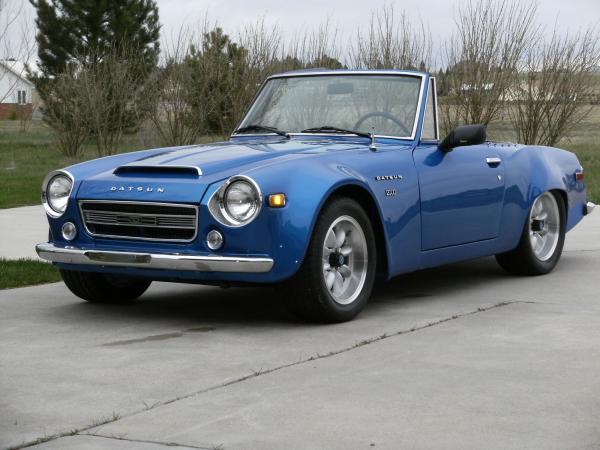
That's my Datsun.
I took my Accord to the Honda dealer this morning for the brake problem. They inspected the brake system and didn't find any problem. Duh, it was +15 degrees this morning, not -10 like last week when the problem occurred. They charged me even though the car is still under warranty. They said they thought the check valve in the vacuum line to the booster likely froze and also that mine was the first they'd heard of. Here in Wyoming the air is extremely dry, especially in winter. Even with brake fluid being hygroscopic, I think it's very unlikely the system has absorbed enough water to create a slug of water that would freeze. And if the check valve freezes closed, why does it magically free up after applying the brakes 2 or 3 times. If I have an accident due to this recurring, at least I have the documentation that I notified the Honda dealer and they chose to do nothing but inspect it at a much warmer temperature (it sat in my heated garage last night and it was probably 70 degrees in their shop).